

Properties
Headquarters House
118 East Dickson
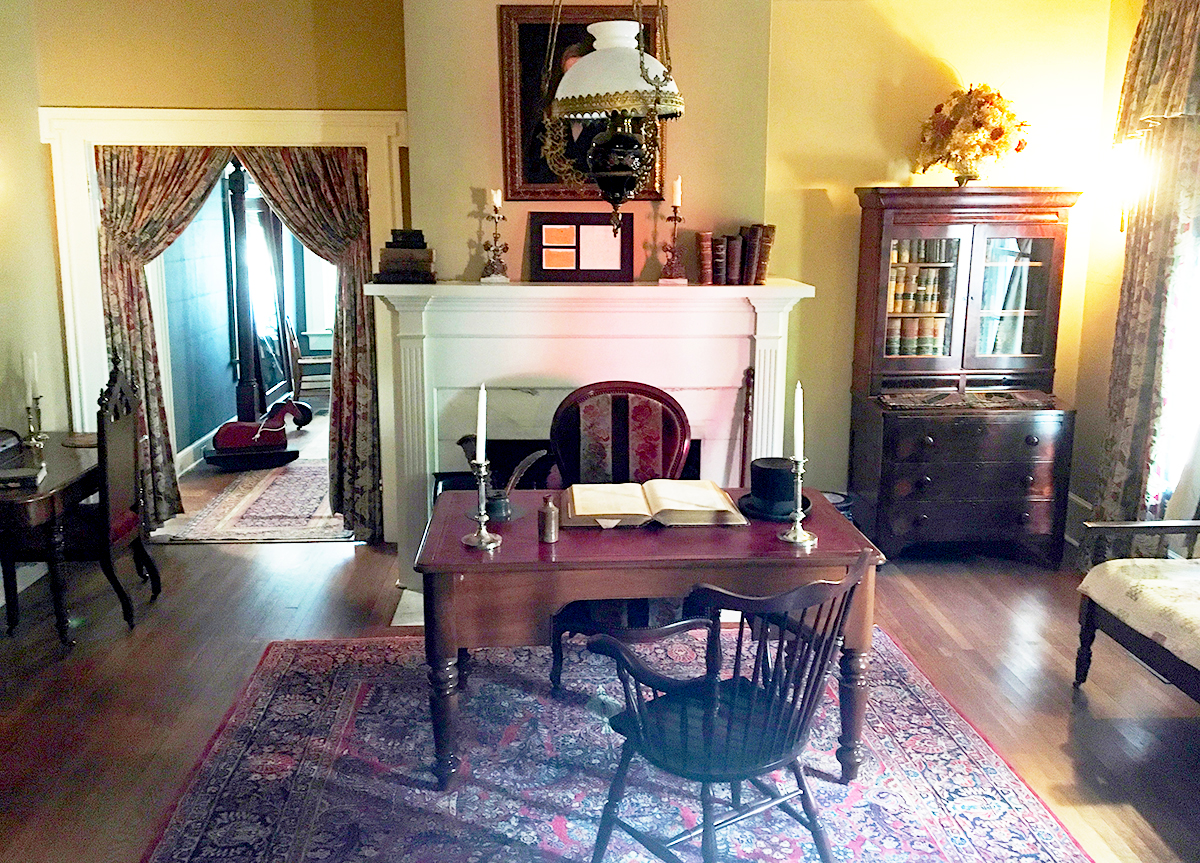
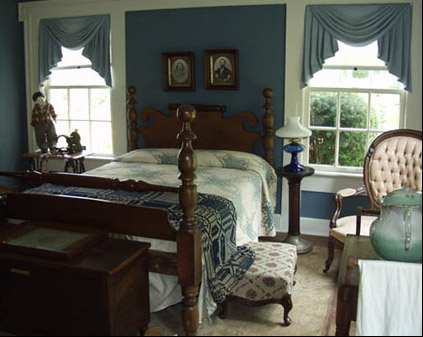
Headquarters House was built in 1853 by George Baker for Judge Jonas Tebbetts and his wife Matilda on a 4-acre plot “on the northeast edge of town.” The family lived there until the Civil War. The property was acquired by the society in the 1960s. It now serves as society headquarters and is operated as a period museum.
Because Judge Tebbetts was an outspoken Unionist, his life was endangered, and the family left Fayetteville for Missouri sometime after the Battle of Pea Ridge in 1862.
On April 18, 1863, the Battle of Fayetteville was fought on the front lawn of the house. A doorway bears the scar of a minie ball, which is preserved in testament to the battle endured by the citizens of Fayetteville – and which earned the intersection of College and Dickson the title “Bloody Corner.”
A brick smokehouse behind the house is also preserved on the grounds. The gardens surrounding the house are maintained by the Washington County Master Gardeners.
Tours both for groups and individuals are available. Tours of Headquarters House and its grounds are available during office hours, 12 noon to 3 pm Tuesday, Wednesday, and Thursday and Saturdays by appointment. Closed Monday and Friday. A tour of the house lasts about 35 minutes. Call Headquarters House office at 479-521-2970 to schedule an individual tour.

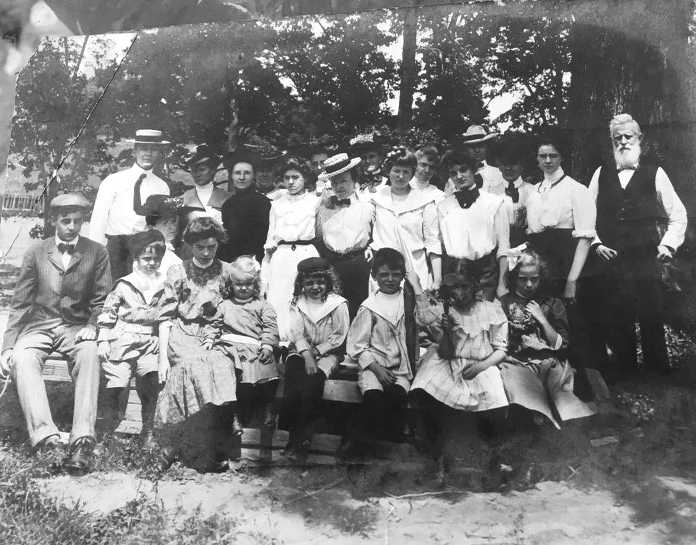
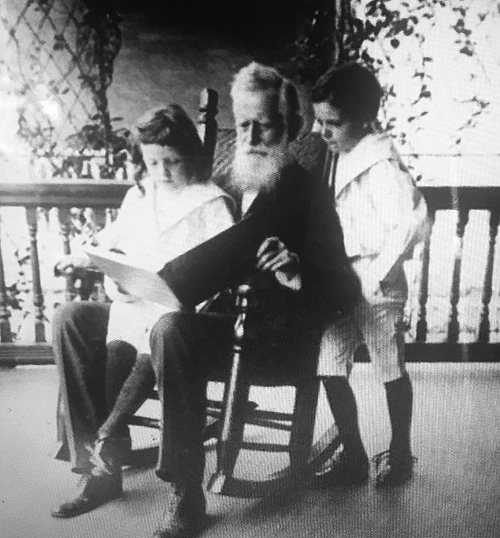
These photos show Jonas Tebbetts with his family (top) and with two of his grandchildren (below). The photographs are courtesy of the Ellen Galey Scher family, descendants of Jonas and Matilda Tebbetts.
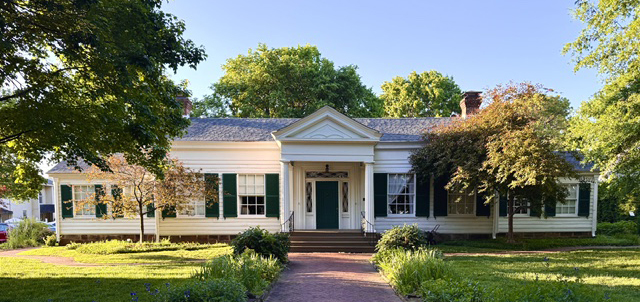
Photo by Peggy Chenault showing newly installed shutters.
RIDGE HOUSE
230 W. Center Street
The building now known as the Ridge House has been dated back to 1836 and is considered to be the oldest house still standing in Fayetteville. The original portion of the house was a two-pen, “dog-trot” or “dog-run” structure; that is, two single rooms separated by an open passage or breezeway and covered by one roof. Its pine floors and fieldstone fireplaces are original.
Sarah Bird Northrup Ridge bought the house in 1840 as a refuge for her and her seven children. She had fled Indian Territory after her Cherokee husband John Ridge, his father and cousin were killed by rival Cherokees. Among her children, son John Rollin Ridge became best known as the first Native American to publish a novel.
The historical society acquired the Ridge House in the early 1970s after it was threatened with destruction and its history came to light. It stands today as a post-Trail of Tears site, commemorating the John Ridge family and all those who were forced to leave their homes in the East and travel to Indian Territory. Plaster was added in the late 1800s to enclose the log walls on the lower floor of the house, but portions of the wall in the front foyer have been cut away so visitors can see the old log structure.
Today, the house is used for professional offices.
For more information on the Trail of Tears, see the Encyclopedia of Arkansas at https://encyclopediaofarkansas.net/entries/trail-of-tears-2294/.
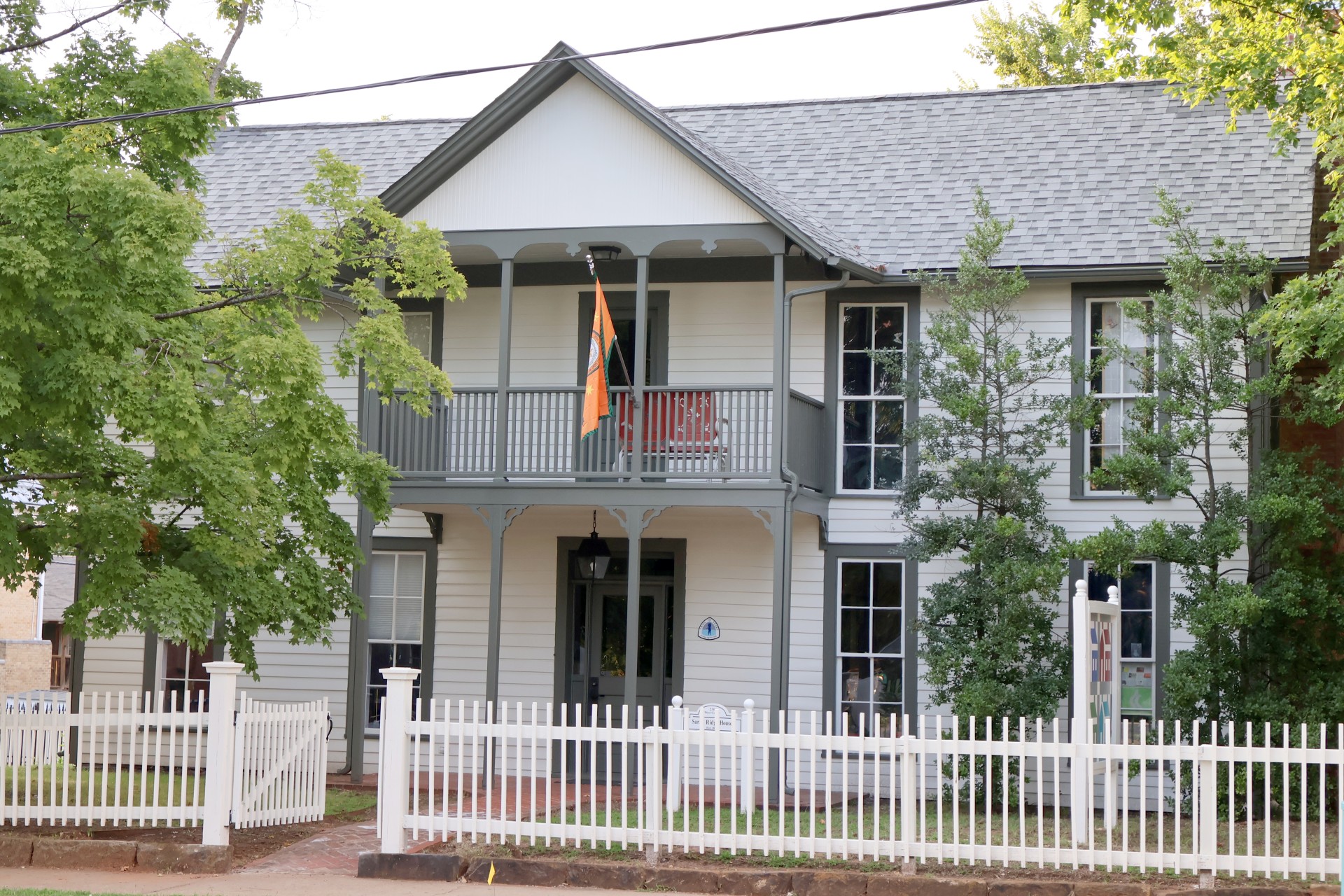
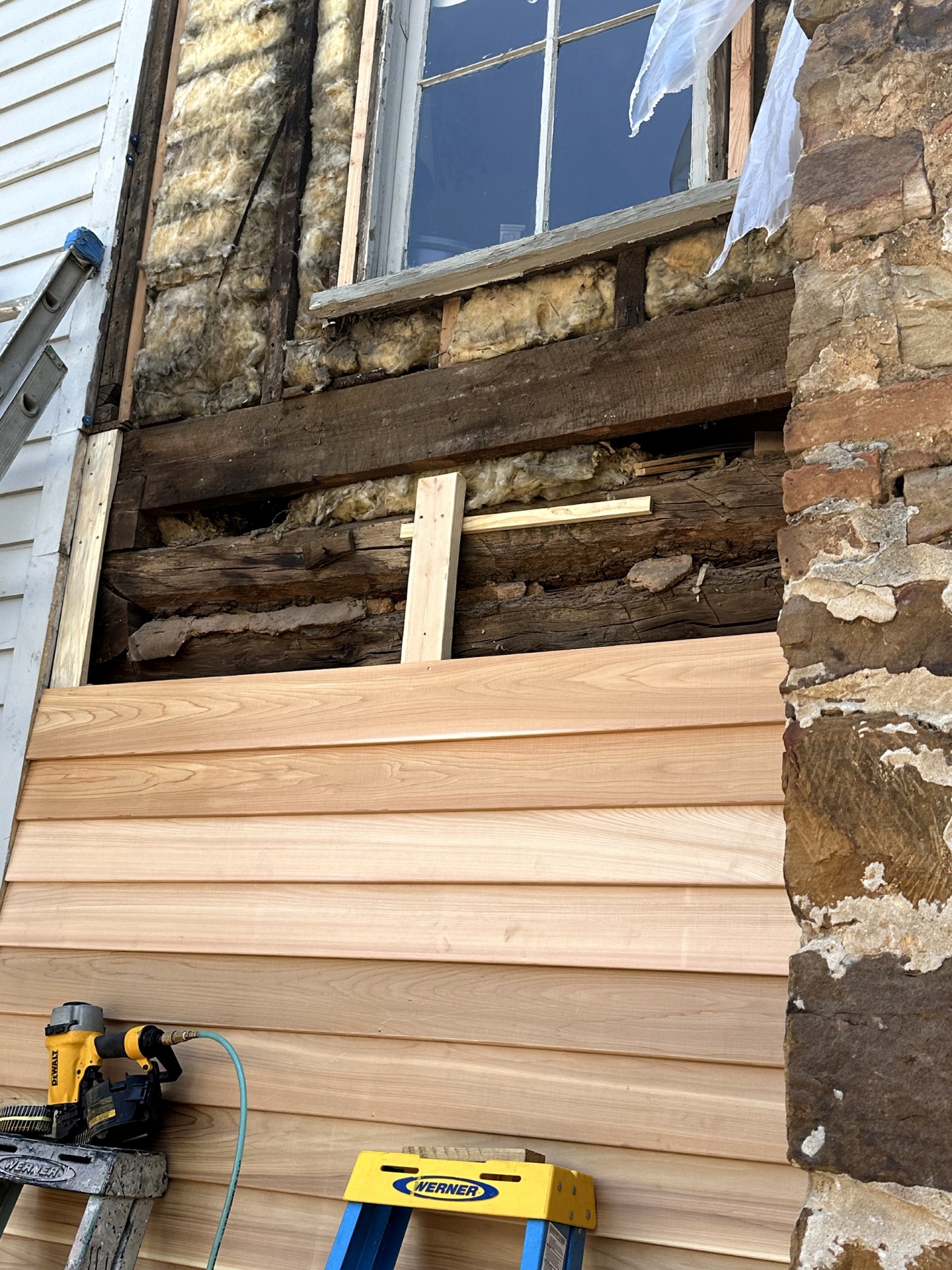
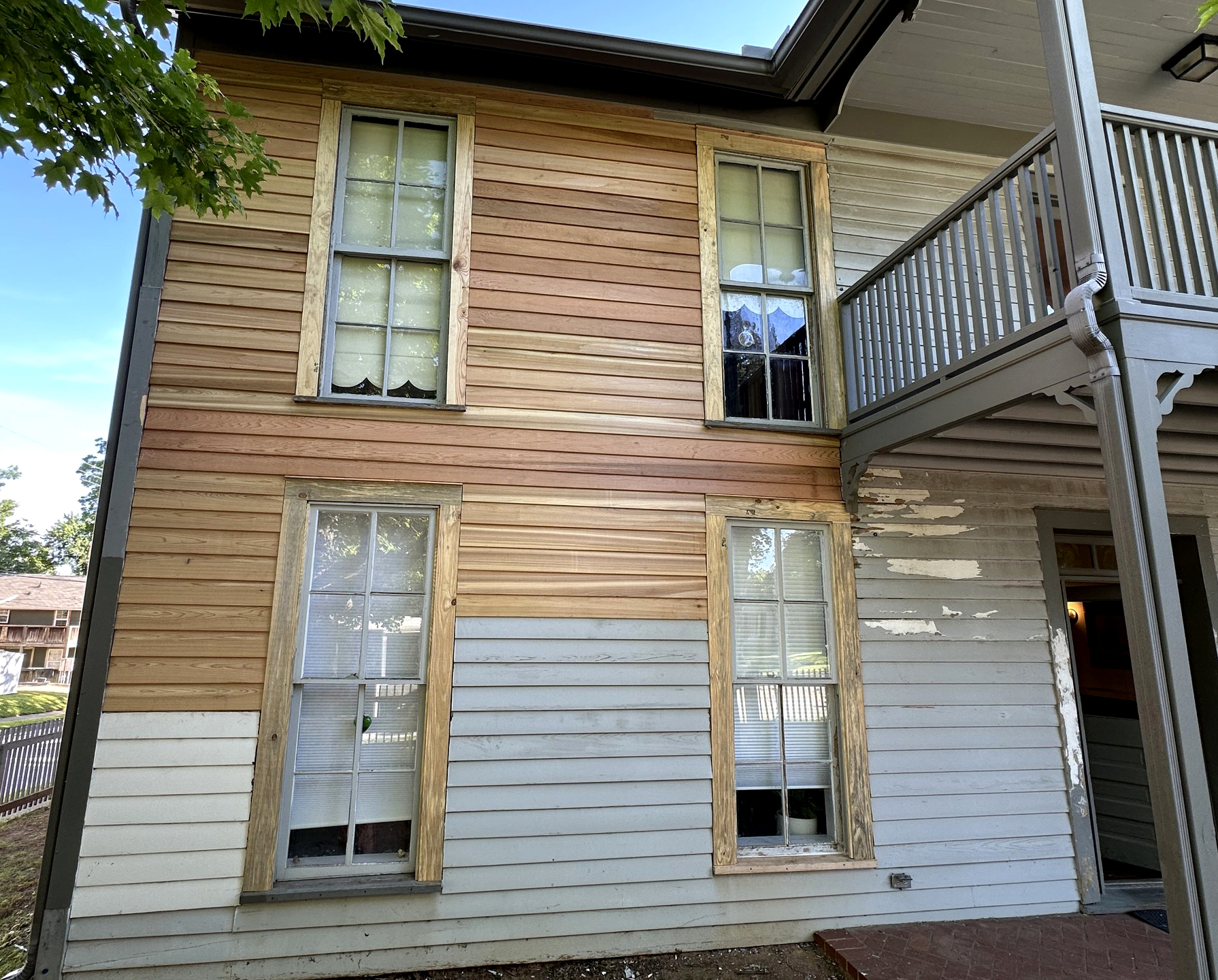
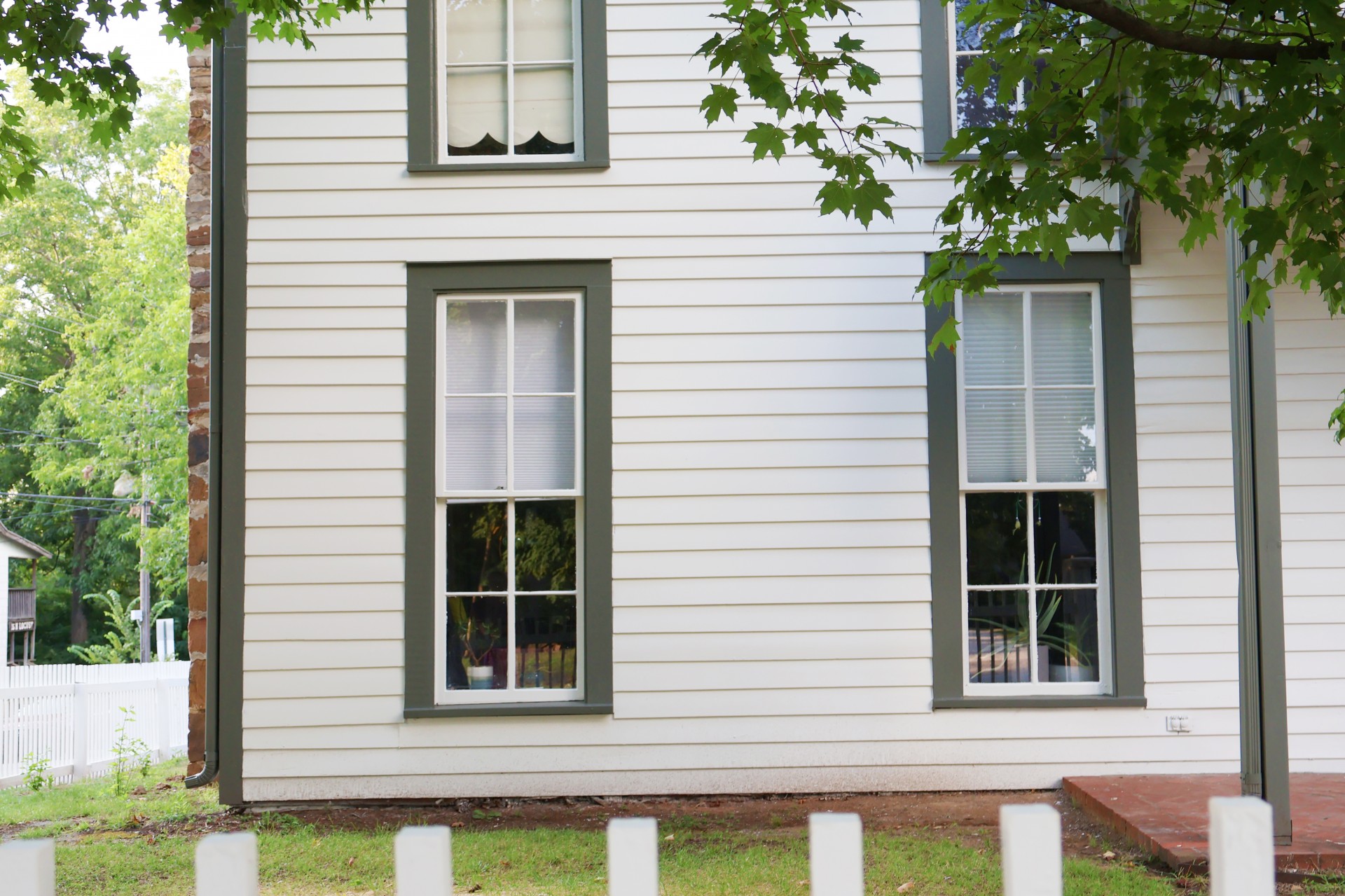
The Ridge House underwent a major renovation during spring and summer 2024. On the exterior, boards and window frames were replaced, and the whole structure was repainted. In the photo above, some of the original structure can be seen. Interior work included repainting, adding lighting, and updating the kitchen area. The Property Management Committee, led by John Firmin and Lee Anne Wiederkehr oversaw the work.
Archibald Yell Law Office
118 E. Dickson
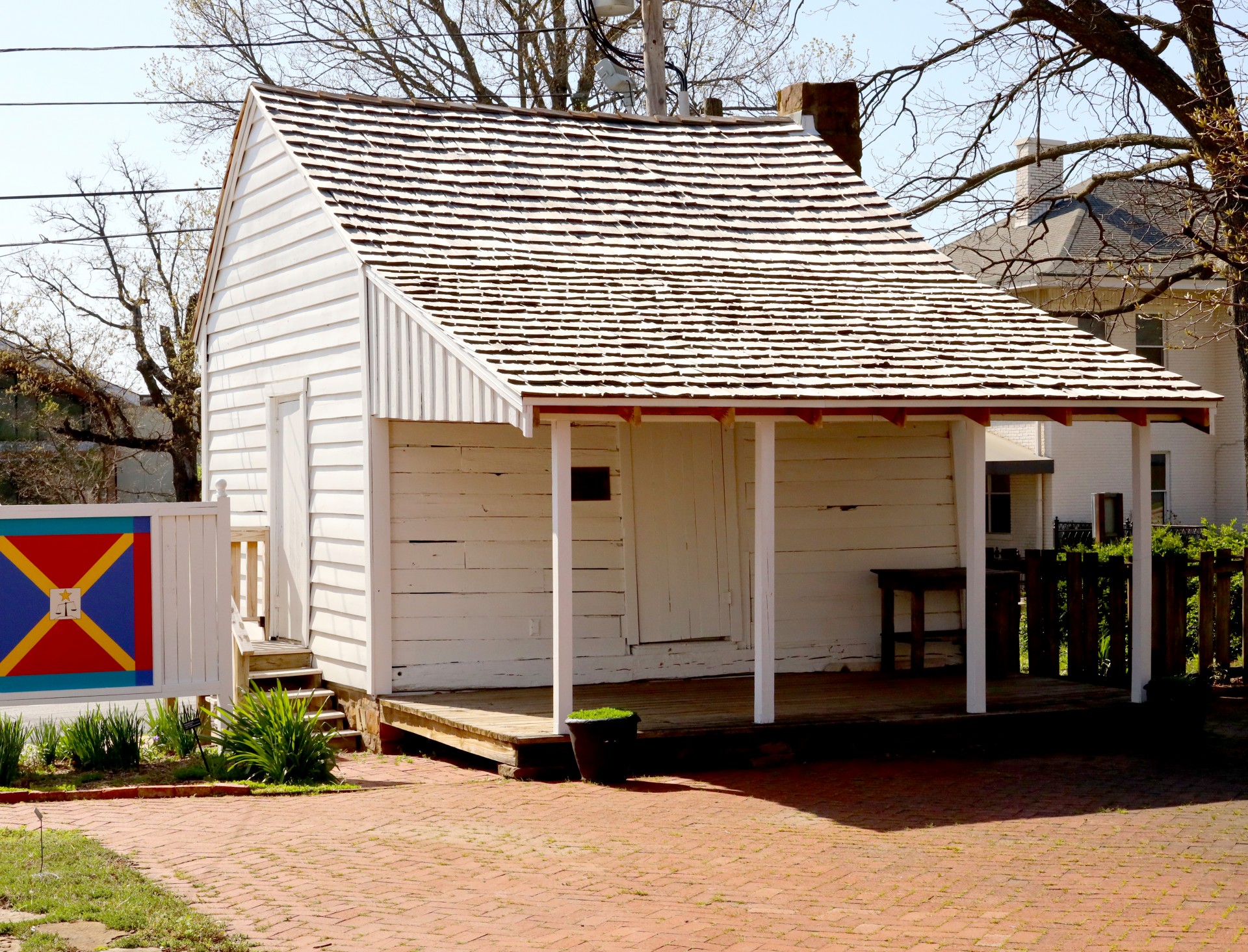
The Archibald Yell Law Office was built around 1835 and moved from its original location on south College Avenue to the grounds of Headquarters House in 1992. Archibald Yell – a judge, congressman, and soldier – was a colorful figure from Arkansas’s territorial days. He is profiled in the Encyclopedia of Arkansas at https://encyclopediaofarkansas.net/entries/archibald-yell-126/
Yell, who was the state’s second governor (1840-1844), owned a large estate in south Fayetteville in the 1830s where he built Waxhaws, a four-room Greek revival house, and had his law office.
The Washington County Historical Society, in cooperation with the Washington County Bar Association, preserved Yell’s Law Office and moved it to the grounds of Headquarters House.
