

Cane Hill
Walter Lemke called Cane Hill one of our county’s most romantic spots. Most certainly it is one of our most historic spots. Not only was it one of the first settlements after Lovely County was formed in 1827, but it also witnessed the establishment of one of the State’s first colleges. In addition, it was the site of several of Washington County’s early mills, a Civil War battle on November 28, 1862, and a noted early day pottery. Cane Hill was the center of Cumberland Presbyterian activities from the earliest times, the source of an influence that spread throughout the country. The first Sunday School in Arkansas was established here in 1828, and in fact, the first public school and library in the state were also in Cane Hill.
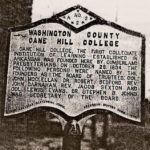 Cane Hill College, twice destroyed by fire and twice rebuilt, made this community the cultural center of a wide area. The names of its residents were important countywide in antebellum days, names like Buchanan, Carnahan, McClellan, Bean, Pyeatt, Mitchell, and Earle.
Cane Hill has been the official name of the post office since 1901; however, the first post office called Cane Hill was established in 1829. The area now known as Cane Hill was originally three rural communities. The northernmost section was the original site of the post office and was later known as White Church. The site of the current Cane Hill post office was also known at various times as Boonsboro, Boonsborough, and Steam Mill. The southernmost community, in present-day Clyde, was known as Russellville. None of these communities was ever incorporated.
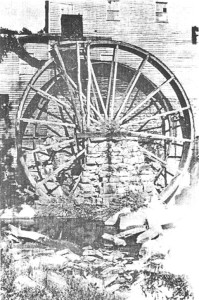 Grist mills and saw mills played an important part on the early history of Washington County. The first mill of record in the area is said to have been built by Mark Bean between Cane Hill and Lincoln at Bean’s Spring. Lemke says this mill may exist only in legend. John Rankin Pyeatt did build a mill north of Cane Hill on land he bought in 1838. William Moore married Pyeatt’s daughter, and the mill then became known as the Moore-Pyeatt Mill. It operated during the Civil War, likely to the benefit of whichever army was in the area at the time. After that war, Moore replaced the mill machinery, bringing new works from Cincinnati, Ohio. After Pyeatt died in 1895, Moore operated the mill as before, but when his daughter married Walter Buchannan, they became partners in the mill. The Moore-Buchannan Mill was moved to about a mile south of Cane Hill, along highway 45, where the old water wheel stands still today. Lemke reported the mill remained in operation until the 1930s.
Cane Hill once boasted newspapers, hotels, mills, colleges, a Masonic Lodge, and a bank, but still offers plenty of historic attractions that no one interested in area history should miss. In the center of the village is the marker erected by the Arkansas Centennial Commission in commemoration of old Cane Hill College. The campus was atop the hill a hundred yards to the west, and the 1874 brick building remains. Down highway 45, and Jordan Creek, to the west, the visitor will find the ruins of the old mill — its 34-foot overshot wheel and the rebuilt foundation walls. Several houses as well as the mill and the cemetery are on the National Register of Historic Places.
Today, Cane Hill celebrates its early days with a festival in September with music, crafts, and sorghum cane syrup making. A museum operates in the old college building.
Bibliography
“The Old Mill at Cane Hill,” by W.J. Lemke, Flashback, November 1961.
Historic Washington County, by W.J. Lemke. Fayetteville, AR: Washington County Historical Society, 1952.
“Cane Hill (Washington County),” by Julanne S. Allison. The Encyclopedia of Arkansas.
